
Sustainable Access Equipment for ESG-Conscious Teams

October 14, 2025

Supporting Compliance, Carbon Reduction, and Safer Working at Height

As sustainability becomes a core pillar of procurement and compliance strategy across UK workplaces, Health & Safety professionals are under increasing pressure to align their equipment choices with Environmental, Social and Governance (ESG) objectives.


From local authorities to industrial facilities and national contractors, ladder and steps selection is no longer just about function or price, it’s about demonstrating a measurable commitment to sustainability and safety.


Here’s how Lyte Ladders & Towers is helping teams meet their ESG targets without compromising on safety, stability, or standards:


Low-Carbon Aluminium as Standard

Every Lyte ladder is manufactured using Low Carbon Recycled Aluminium 4.0 for the rungs and treads, sourced in the UK with a significantly reduced carbon footprint. This not only reduces embedded emissions in your supply chain but also supports Scope 3 carbon reduction across your asset base:

✅ Up to 75% less embodied carbon
✅ Supports net zero plans and ISO 14001 accreditation


Made in the UK, Powered by Solar

Our Swansea-based manufacturing facility is powered by a 350kW solar installation, reducing our reliance on fossil fuels and significantly lowering the environmental impact of each ladder we produce. UK-based production also cuts the emissions associated with overseas freight:

✅ Reduces transport-related emissions
✅ Strengthens UK-based supply chains and ethical labour practices


Repairable by Design, Not Disposable

Many Lyte products feature bolted, modular components that can be easily repaired or replaced. This allows companies to extend the lifecycle of their equipment and avoid unnecessary waste, which is a key consideration in circular procurement strategies.

✅ Supports sustainable maintenance practices
✅ Reduces waste-to-landfill and total cost of ownership


Fully Certified, Inspection-Ready Products

Lyte ladders and towers are backed by third-party certification, supported by downloadable inspection checklists and safety guidance to help you maintain compliance under WAHR.

✅ Easy to integrate into internal safety systems
✅ Enables stronger Governance reporting and due diligence trails


Part of a Holistic ESG Approach

We’re not just making ladders, we’re transforming our business to meet the demands of responsible, future-focused customers. Our ESG efforts span:

  • Environmental: Low-carbon materials, energy efficiency, waste reduction
  • Social: Staff wellbeing, supporting our community, UK manufacturing
  • Governance: Detailed policies, supplier codes of conduct, audit readiness

Lyte is an EcoVardis member, giving you further confidence in our ESG credentials.


Why It Matters for Your Role

Whether you're:

  • Overseeing access equipment in a safety-critical environment
  • Specifying suppliers within a procurement framework
  • Auditing equipment usage across multiple sites
  • Preparing for ESG reporting or compliance reviews

... your choice of working at height equipment must now align with both risk management and corporate responsibility.


The Safer, Greener Choice

From our repairable products, like MagnaStep stepladders or LytePod podium, every product is engineered to support both the people using it and the planet sustaining it.

By choosing Lyte, you’re choosing to:

  • Meet your safety obligations
  • Reduce your environmental impact
  • Strengthen your governance reporting
  • And deliver better value through longevity


Every safe step should leave a smaller footprint.

Contact us for specifications, inspection templates and guidance:
📧 sales@lyteladders.co.uk
📞 01792 796 666
🌐
www.lyteladders.co.uk/sustainability


Lyte. Leading the way in sustainable access solutions.
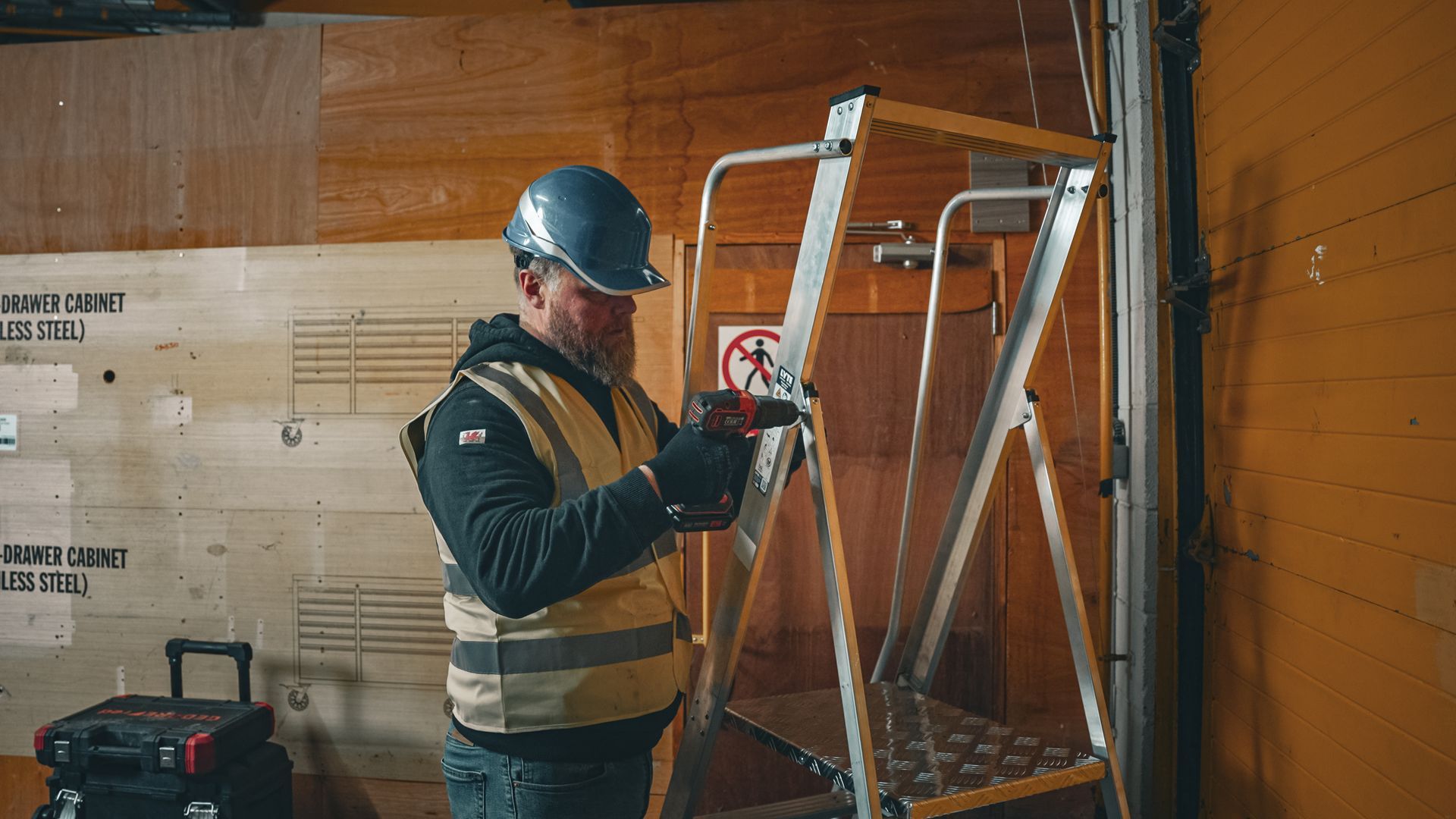
Engineer repairing a step ladder

Repairable Bolted Designs

Solar Powered UK Factory

Low Carbon Recycled Aluminium Rungs & Treads

February 26, 2026
When choosing a professional ladder, most people focus on height, material and load rating. However, one detail is often overlooked: The shape of the rung. It might seem minor, but in reality, rung profile has a direct impact on comfort, fatigue and suitability for prolonged trade use. In this guide, we explain the difference between square rung ladders and D-shaped rungs , and why rung design matters more than you might think. What Is a Square Rung Ladder? Square rung ladders use rungs which have flat faces and defined corners. When the ladder is stored vertically, the rung appears level and square. However, ladders are not climbed vertically. Following the HSE 1-in-4 rule , they are typically positioned at approximately a 75-degree working angle . At this climbing angle, something important happens. The foot does not rest on the flat face of the square rung. Instead, it often rests on the corner edge of the square profile. This changes how pressure is distributed through the sole of the foot. Why Rung Shape Matters at a 75-Degree Angle When positioned correctly against a structure, a ladder leans forward at a 75-degree angle. This means the user’s weight transfers onto the leading edge of the rung. With square rungs: The corner edge becomes the primary contact point The surface area under the foot is reduced Pressure is concentrated rather than distributed For very short climbs, this may not be noticeable. However, for repeated climbs, prolonged standing or trade work involving tools and materials, the difference becomes more apparent. Reduced surface contact can increase foot fatigue and discomfort over time. This is particularly relevant for: Building work Maintenance tasks Electrical installations Facilities management Repeated daily ladder use The Design of D-Shaped Rungs Lyte ladders use D-shaped rungs specifically to address this issue. A D-shaped rung presents a broader, flatter stepping surface when the ladder is positioned at its correct working angle. This means: A greater portion of the foot makes contact with the rung Weight is distributed more evenly Pressure points are reduced Standing comfort is improved Rather than resting on an edge, the foot rests on a shaped surface designed for climbing ergonomics. For professional users who spend more than “two minutes up and down”, this matters. Comfort and Fatigue in Professional Environments Professional ladder users rarely climb once and come down: They climb repeatedly. They carry tools. They pause mid-task. They reposition. They work at height for longer periods. Small design differences can compound over the course of a working day. Comfort is not a luxury feature. It is part of fatigue management. Reduced fatigue could contribute to: Better balance More secure footing Improved confidence at height Lower likelihood of rushed descent This is why rung profile is considered carefully in professional ladder design. Are Square Rung Ladders Unsafe? Square rung ladders are used in various markets and applications. The key consideration is suitability. For occasional, light-duty access tasks, square rungs may be acceptable. For frequent, professional or industrial use, rung ergonomics become far more important. At Lyte, our ladders are designed specifically for trade and industrial environments. That includes: Repeated daily use Load carrying Outdoor exposure Extended standing time Rung profile is part of that design philosophy. Design Choices Reflect Intended Use When selecting ladder equipment (ideally for low-risk, short duration tasks), it is important to consider: Frequency of use Duration of use Environment Load being carried User comfort over time Not all ladders are designed for the same application. Lyte ladders are engineered with professional users in mind, and D-shaped rungs form part of that approach. When evaluating ladders, small details often reveal the intended market. Rung shape may seem minor at first glance, but at a 75-degree working angle, it changes how your foot contacts the ladder entirely. For professional environments where ladders are climbed repeatedly and used for extended periods, comfort and load distribution matter. Choosing purpose-designed equipment helps ensure the ladder supports the user, not the other way around.
Maintenance worker using the Boxing Ring Tower to access the roof of a portable building
February 2, 2026
Working on flat roofs and elevated workspaces is a common requirement across construction, transport, facilities management and utilities. Yet it remains one of the most challenging areas to manage safely. Whether accessing the roof of a bus, a welfare unit, a container, a substation or a commercial building, safety at the point of access, plus edge protection on the roof itself is critical. The challenge of accessing flat roofs safely Flat roofs and elevated workspaces are widely used for: Plant and equipment maintenance Vehicle and fleet servicing Inspections and surveys Installation and repair work While the work itself may be straightforward, getting safely onto the roof and working hands-free when in the workspace is often where problems arise. Common issues include: Limited or no edge protection Unsafe transitions from access equipment to roof Increased risk of falls during access and egress In many environments, these risks are difficult to eliminate using standard ladders or basic access equipment. Introducing the Lyte Boxing Ring Tower (BRT) The Lyte Boxing Ring Tower (BRT) provides a fully enclosed overhead workspace that creates true 360-degree fall protection around the work area. This unique “boxing ring” design removes the need to install temporary edge protection before stepping onto the flat roof surface, offering a safer, faster setup for a wide range of elevated tasks. The BRT integrates with Lyte’s HiLyte Tower System and uses a transition deck to allow operatives to step safely onto the roof or elevated surface. The overhead frame extends out from the tower, allowing safe access to work areas where conventional towers cannot reach. This is especially suited to rail, transport, utilities and site accommodation applications. Key features include: 360-degree fall protection barriers around the workspace area Controlled transition from tower to roof Secure, stable access for repeated use Designed for flat roofs and elevated workspaces Once on the roof, operatives can work as required, knowing that the most hazardous part of the task, the access and egress, has been properly controlled. The work is carried out on the roof or surface itself , while the Boxing Ring Tower frame provides 360-degree fall protection around the workspace . Applications for the Boxing Ring Tower The BRT delivers a significantly safer method of access for tasks where users must transition from a tower onto a flat work surface. The solution was developed in response to a transport sector requirement for safe roof access on buses, but the same access challenges exist across many industries. The Lyte Boxing Ring Tower is suited to a wide range of real-world applications, including: Buses, coaches and commercial vehicles Trains and rail vehicles Flat roofs and rooftop plant Substations and utilities infrastructure Containers, welfare units and modular buildings The fully enclosed “boxing ring” workspace surrounds the user and provides 360-degree fall protection, significantly reducing risk when transitioning onto elevated structures. Designed and manufactured in the UK The Boxing Ring Tower is designed and manufactured in the UK , ensuring: Consistent quality and durability Clear specifications for professional use Long-term support and availability This makes it suitable not only for end users, but also for hire companies, contractors and facilities teams who need reliable access solutions. Learn more about the Lyte Boxing Ring Tower If you are responsible for working at height on flat roofs or elevated workspaces, and want a safer way to manage access, the Lyte Boxing Ring Tower offers a practical, purpose-built solution. 👉 View the product here: https://www.lyteladders.co.uk/product/lyte-boxing-ring-tower-BRT
Paint pots next to a yellow fibreglass platform step ladder
November 4, 2025
Find the best ladders for decorators. From stairwells to public buildings, Lyte’s UK-made professional ladders and platforms keep decorators safe and efficient at height.